
 SG
SG MY
MY
 HK
HK
 Global
Annual ACRA Taxonomy Update Tracker (2026)
Introduction
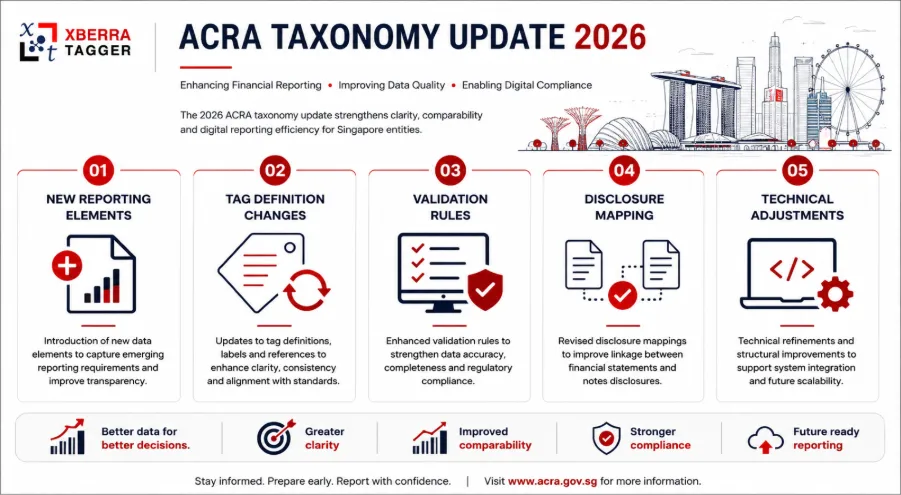
The ACRA taxonomy update 2026 is a critical consideration for businesses, filing agents, accountants, and XBRL professionals in Singapore. The Accounting and Corporate Regulatory Authority (ACRA) makes changes to its taxonomy to reflect updates to accounting standards, reporting regulations, and related requirements. The taxonomy serves as a reference for XBRL tagging, validation rules, financial disclosure, and other reporting-related matters.
It is crucial for organizations to understand the implications and preparations associated with relevant taxonomy changes. This guide covers an overview of the ACRA taxonomy update 2026, including key areas of change, impact assessment, preparation guidelines, and related considerations.
What Is the ACRA Taxonomy?
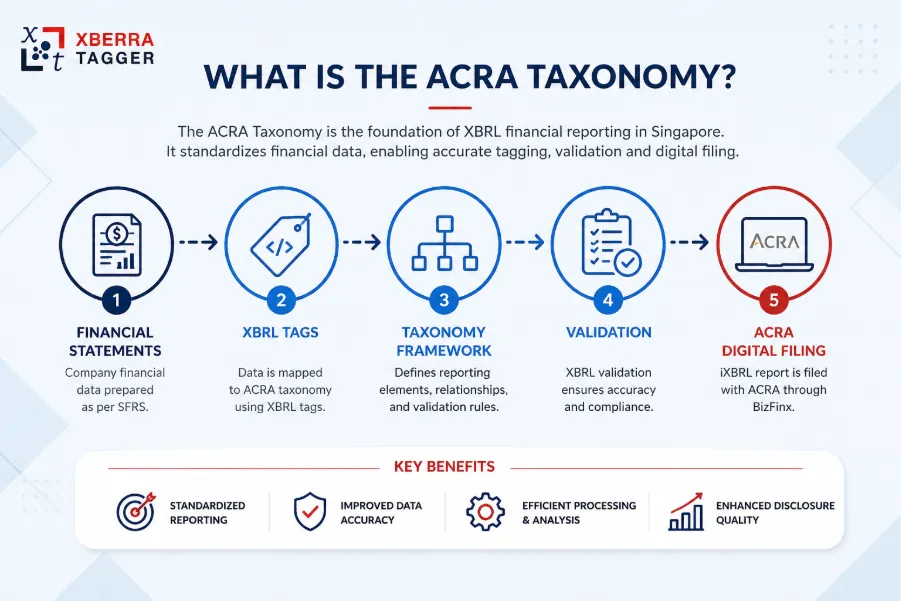
The ACRA taxonomy is the framework that underpins financial statement reporting in XBRL (Extensible Business Reporting Language) format. It covers reporting elements, relationships, XBRL validation rules, and disclosure requirements. Using XBRL tags enables regulatory reporting data to be processed and analyzed more efficiently by computer systems.
The taxonomy facilitates standardized financial reporting while enhancing data accuracy, XBRL validation, disclosure quality, and other reporting benefits. As such, reporting entities should use the relevant ACRA taxonomy rather than relying on previous XBRL tagging conventions.
Why the ACRA Taxonomy Update 2026 Matters
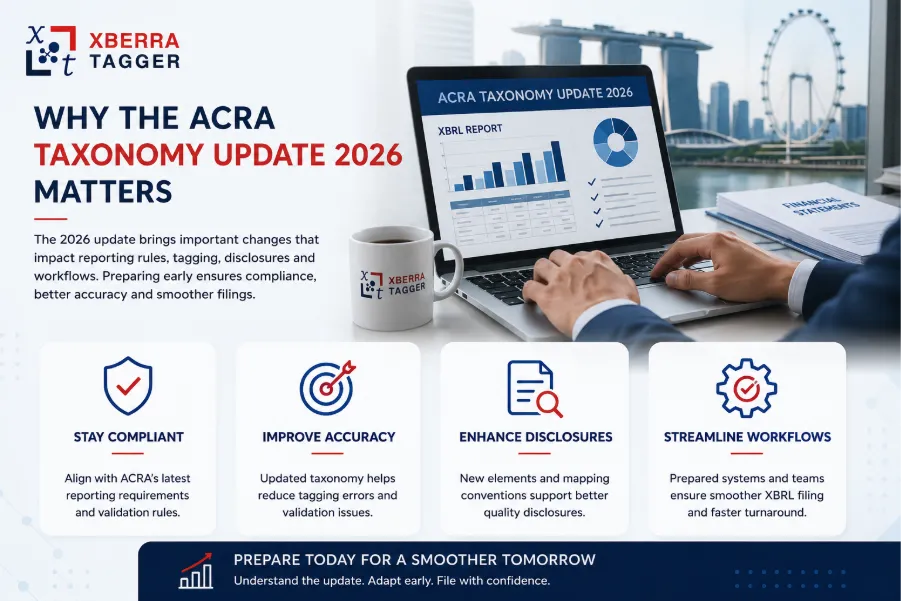
The ACRA taxonomy update 2026 has several implications for businesses that file financial statements with the regulator. Changes to the taxonomy may affect reporting validation rules, tagging conventions, disclosure requirements, and existing XBRL workflows.
Preparing for the update can help businesses achieve compliance, improve filing accuracy, and strengthen XBRL validation processes. The same applies to filing agents, accounting firms, XBRL professionals, and software providers that need to align their operations with updated requirements.
Key Areas of the ACRA Taxonomy Update 2026
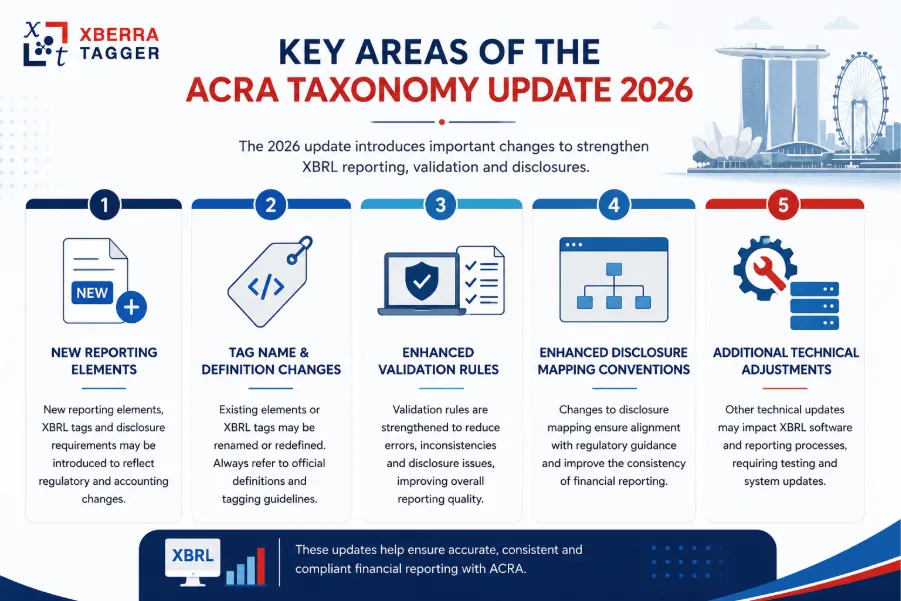
Businesses and XBRL professionals should review the official ACRA documents related to the 2026 taxonomy update. Common areas of change include the following:
1. New Reporting Elements
New reporting elements may be added to the ACRA taxonomy from time to time. These changes can include additions to XBRL tags, disclosure requirements, and other aspects of financial reporting. Businesses should understand the nature and scope of new elements before adopting them.
2. Tag Name and Definition Changes
ACRA taxonomy changes may involve redefining existing elements or renaming specific XBRL tags. Entities should not assume that similar tags have the same meaning simply because the terms appear comparable. Reporters should always refer to the relevant tag guidelines and definitions.
3. Enhanced Validation Rules
Validation rules in the XBRL taxonomy may be modified to strengthen controls over financial reporting. These changes can target recurring issues such as inconsistencies, tagging errors, and disclosure problems. While enhanced validation improves reporting quality, it may also generate additional errors that need to be reviewed.
4. Enhanced Disclosure Mapping Conventions
ACRA taxonomy updates may also affect reporting conventions, including disclosure mapping. Reporters should ensure that their definitions and tagging conventions align with the applicable disclosure requirements and regulatory guidance.
5. Additional Technical Adjustments
Other technical adjustments may be included in the update depending on the nature of the changes. Some modifications may affect the operation of XBRL software and therefore require additional preparation and testing.
Impact of the ACRA Taxonomy Update 2026
The impact varies depending on the nature of the changes and the reporting entity. Key implications are outlined below.
Companies Filing Financial Statements
Businesses that file financial statements with ACRA may need to:
- Review existing XBRL mappings
- Check requirements related to disclosure conventions
- Perform pre-validation assessments
- Confirm XBRL filing software compatibility
- Update report templates and related procedures
It is also useful to identify a person or department responsible for monitoring XBRL taxonomy changes and coordinating necessary updates.
Accounting Firms and Filing Agents
Accounting firms and filing agents should update internal procedures and ensure employees understand the relevant changes. Financial statements should be mapped correctly based on each reporting entity's requirements.
Firms providing filing services to multiple organizations should also consider the individual reporting requirements of each client rather than applying a single approach to every filing.
XBRL Software Vendors
XBRL software vendors may need to update their solutions based on the technical requirements of the ACRA taxonomy update 2026. Software providers should test new features and validation functions before making updated solutions available to end users.
Common Challenges with XBRL Taxonomy Updates
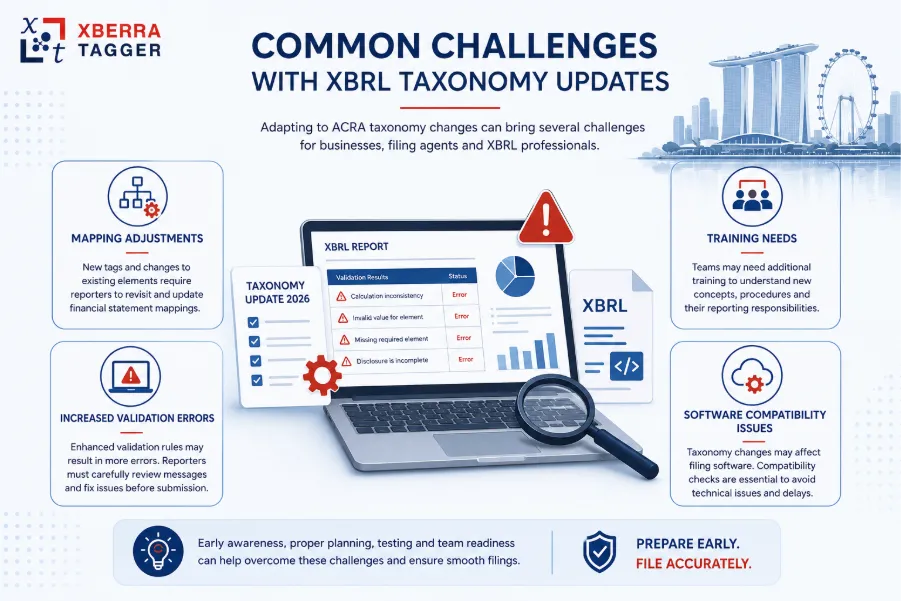
Many businesses and XBRL professionals face challenges when adapting to taxonomy changes.
| Challenge | What it means for your filing |
|---|---|
| Mapping Adjustments | New tags and changes to existing XBRL elements may require you to revisit financial statement mapping conventions. Compare existing tags with applicable concepts and confirm your current mappings remain appropriate. |
| Increased Validation Errors | Changes to validation rules may result in additional errors. Review validation messages carefully and take corrective action before final submission. |
| Training Needs | Teams may need extra time to understand new concepts and procedures. Brief training sessions help finance and XBRL teams apply the changes to their reporting responsibilities. |
| Software Compatibility Issues | Taxonomy changes may affect filing software. Check compatibility before finalizing submissions to avoid technical problems and delays. |
How to Prepare for the ACRA Taxonomy Update 2026
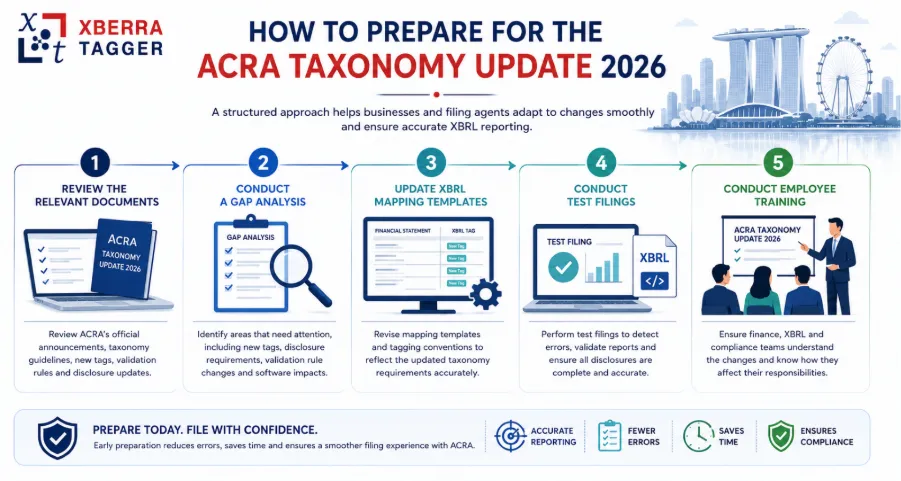
A structured preparation process can help businesses and filing agents manage taxonomy changes with minimal disruption.
- Review the Relevant Documents → Review official documents on the ACRA taxonomy changes. Pay attention to new tags, changes to existing XBRL concepts, validation requirements, and related procedures.
- Conduct a Gap Analysis → Identify areas needing extra preparation: tags that require closer inspection, new disclosures to incorporate, adjustments to validation rules, and software compatibility concerns.
- Update XBRL Mapping Templates → Revise templates where necessary so updated procedures are accurately captured. Keeping records of tagging conventions also supports consistency in future reporting periods.
- Conduct Test Filings → Run test filings to detect incorrect tags, missing information, or disclosure issues before final submission.
- Conduct Employee Training → Make sure finance, XBRL, and compliance personnel understand the changes and how they affect their roles and responsibilities.
Best Practices in XBRL Taxonomy Management
Businesses and filing agents can improve their taxonomy management processes by:
- Preparing for changes well in advance
- Reviewing official guidelines and documents
- Maintaining comprehensive XBRL tagging documentation
- Validating reports before submission
- Keeping XBRL filing software up to date
- Performing internal review and approval procedures
- Conducting employee training when necessary
- Consulting XBRL experts when required
Taxonomy management should be treated as an ongoing process rather than a one-time activity. A structured approach helps organizations respond more efficiently to future taxonomy and reporting changes.
Future Trends in ACRA Taxonomy Reporting
The future of ACRA taxonomy reporting is likely to involve increased automation, enhanced validation capabilities, better data presentation and analysis, and improved regulatory oversight. XBRL expertise is expected to remain important as organizations increasingly rely on digital financial reporting solutions.
Entities looking to improve their long-term reporting processes can benefit from developing XBRL skills, maintaining accurate mapping records, and adopting appropriate automation tools.
Conclusion
The ACRA taxonomy update 2026 is relevant to companies, accountants, filing agents, and software providers involved in Singapore's XBRL reporting process. Understanding the nature and scope of applicable changes allows stakeholders to prepare their reporting processes more effectively.
Companies dealing with financial filings should focus on reviewing relevant guidelines, performing a gap analysis, updating XBRL tagging procedures, conducting test filings, reviewing software requirements, and training employees. These steps support a smoother transition and reduce the risk of XBRL errors and filing delays.
By understanding the update and preparing appropriately, businesses can improve filing accuracy and achieve more reliable XBRL validation outcomes.
Need help with ACRA XBRL filing? Connect with our Expert Team NOW! +65 60272438
FAQs
What is the ACRA Taxonomy Update 2026?+
The ACRA Taxonomy Update 2026 includes changes to Singapore’s XBRL reporting framework. It updates the reporting elements and tags used in financial filings. These changes help ensure filings follow the latest reporting requirements.
Who will be impacted by the change?+
Companies, accountants, filing agents, and XBRL software providers may be affected. They may need to review their current filing processes and XBRL mappings. Software and reporting systems may also require updates.
Why does ACRA need to update the taxonomy?+
ACRA updates the taxonomy to reflect changes in financial reporting requirements. It helps ensure that financial information is reported accurately and consistently. Regular updates also support better compliance with filing requirements.
How can companies prepare for the changes?+
Companies should review the updated ACRA taxonomy and identify relevant changes. They should update their XBRL mappings and filing software where required. Using XBRL Tagger to review and validate filings can also help prevent errors.
What are the consequences of using an old taxonomy version?+
Using an outdated taxonomy may result in validation errors during the filing process. It could also cause delays if the submitted information does not meet current requirements. Companies should use the applicable taxonomy version to support compliant filings.
Will XBRL filing software need updates?+
Yes, XBRL filing software may need to be updated to support the latest taxonomy. Updates can help ensure that the correct tags and reporting elements are available. Companies should check with their software provider before preparing their filings.
How does the ACRA taxonomy impact XBRL filings?+
The ACRA taxonomy defines the tags and reporting elements used in XBRL filings. It determines how financial information is structured and tagged for submission. Using the correct taxonomy helps companies prepare accurate and compliant filings.